This is an innovative initiative focused on reshaping societal narratives around gender by addressing roles, stereotypes, and myths that perpetuate inequality. The project seeks to dismantle harmful gender biases, promote understanding of gender roles, and it emphasizes the need for effective gender education to advocate for inclusivity, peacebuilding, and economic empowerment in Pakistan.
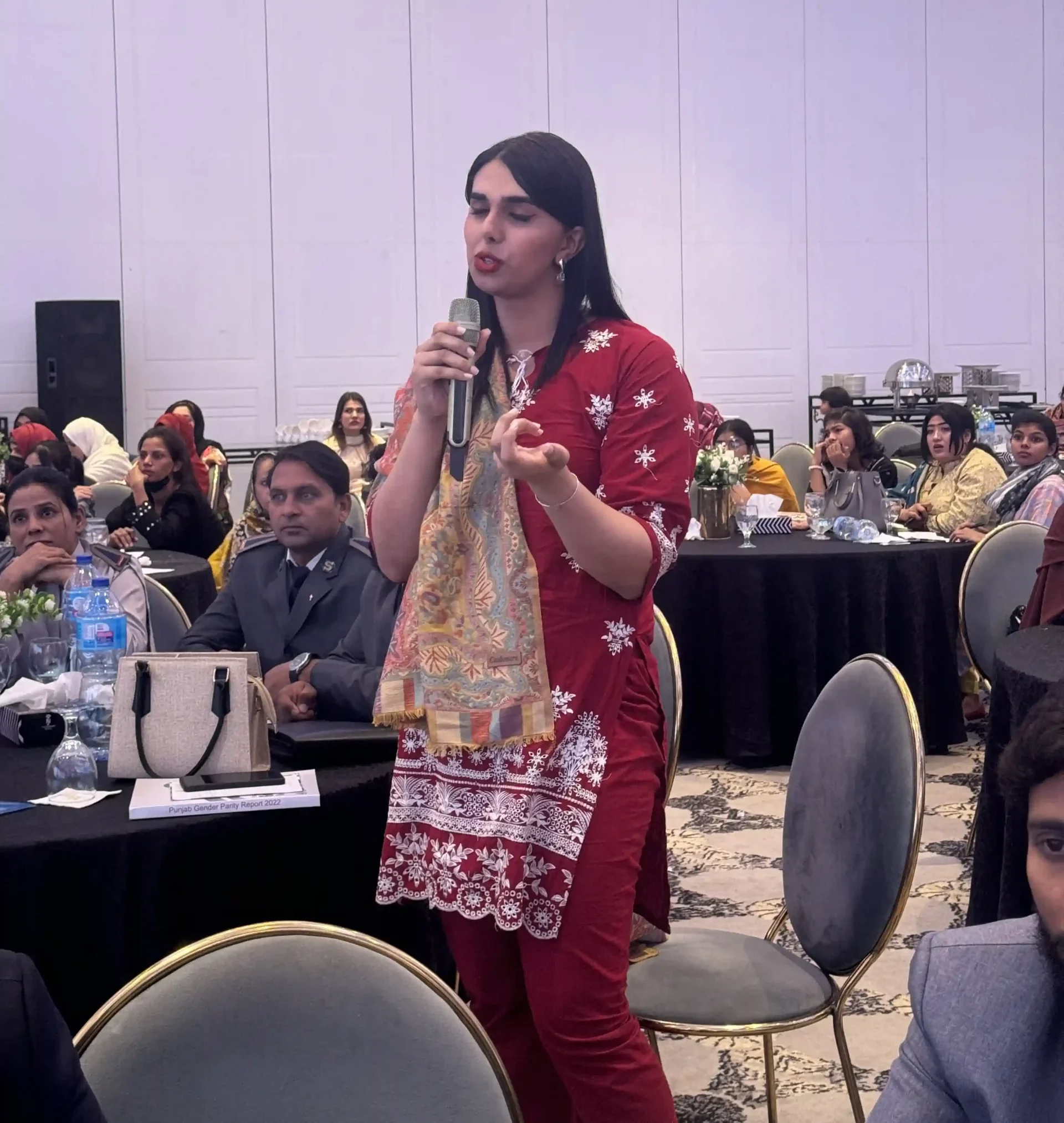
The SINF Summit organized on 29 November 2024 in Lahore offered a platform for transformative dialogue and actionable outcomes, addressing gender-based violence, economic inequities, and stereotypes. The formal proceedings began with a recitation of verses from the Holy Quran and the Bible, highlighting the spirit of inclusivity and shared values. The Master of ceremonies introduced the agenda, underlining the event’s objectives to increase gender equity and peaceful civic engagement. The summit brought together a vibrant and diverse group of approximately 250 participants, (150 women, 68 men and 10 transgender individuals) creating a dynamic space for dialogue and collaboration. The participants included women, men and members of the transgender community, along with minorities and PWD’s ensuring a diverse and inclusive representation that enriched the dialogue with varied perspectives.
The opening plenary session delved into “Inclusive Narratives: Gender Equity and Peaceful Civic Engagement.” Esteemed panelists, including Muhammad Ubaid (Head of Project ‘Promoting Employment by Strengthening the Role of Women in Textiles Industry (GIZ-WE), Nadeem Ashraf (Member Punjab National Commission on Human Rights), Sidra Hamayun (Program Lead: Access to Justice UN WOMEN), and Dr. Amber Javed (Senior Analyst CVE WING NACTA), shared insights on creating frameworks for inclusion. The discourse highlighted the role of institutional policies, grassroots advocacy, and collaborative approaches to bridge societal divides. The guest of honor, Muhammad Arshad Secretary Punjab Commission on the Status of Women, emphasized the government’s commitment to advancing gender equity as a cornerstone of civic harmony.
Following this, the session titled “Unveiling the Layers: Understanding Gender-Based Violence and Collective Action Against It” captivated the audience with its depth and diversity of perspectives. The panel brought together a remarkable lineup of experts and advocates, including Mr. Yousaf (Deputy Director Human Rights Department Lahore), Alisha Sherazi (Psychologist/Trans-activist), Irfan Mufti (Deputy Director SAP-PK), Asma Majeed (Gender Expert), Ms Saquiba Azia, (Component Manager, GIZ-WE), Lt.Nazia (Minority Rights advocate). The panelists shared powerful narratives rooted in their lived experiences and professional insights, this provided a comprehensive understanding of the multifaceted nature of gender-based violence (GBV). The panelists stressed that addressing gender-based violence (GBV) requires a collective effort that includes everyone—men, women, and non-binary individuals—working together. They highlighted the importance of community involvement and grassroots advocacy, emphasizing that real change comes when survivors are at the center of the solutions. The session deeply resonated with the audience, fostering an atmosphere of empathy and urgency. Through an engaging dialogue, it underscored that addressing GBV requires a collaborative effort where individuals, communities, and institutions work together to break the cycle of violence and build a more equitable and safe society.
Channan Theatre Group presented a thought-provoking play. The performance captivated the audience, using art to shed light on societal norms and challenges related to gender inequality.
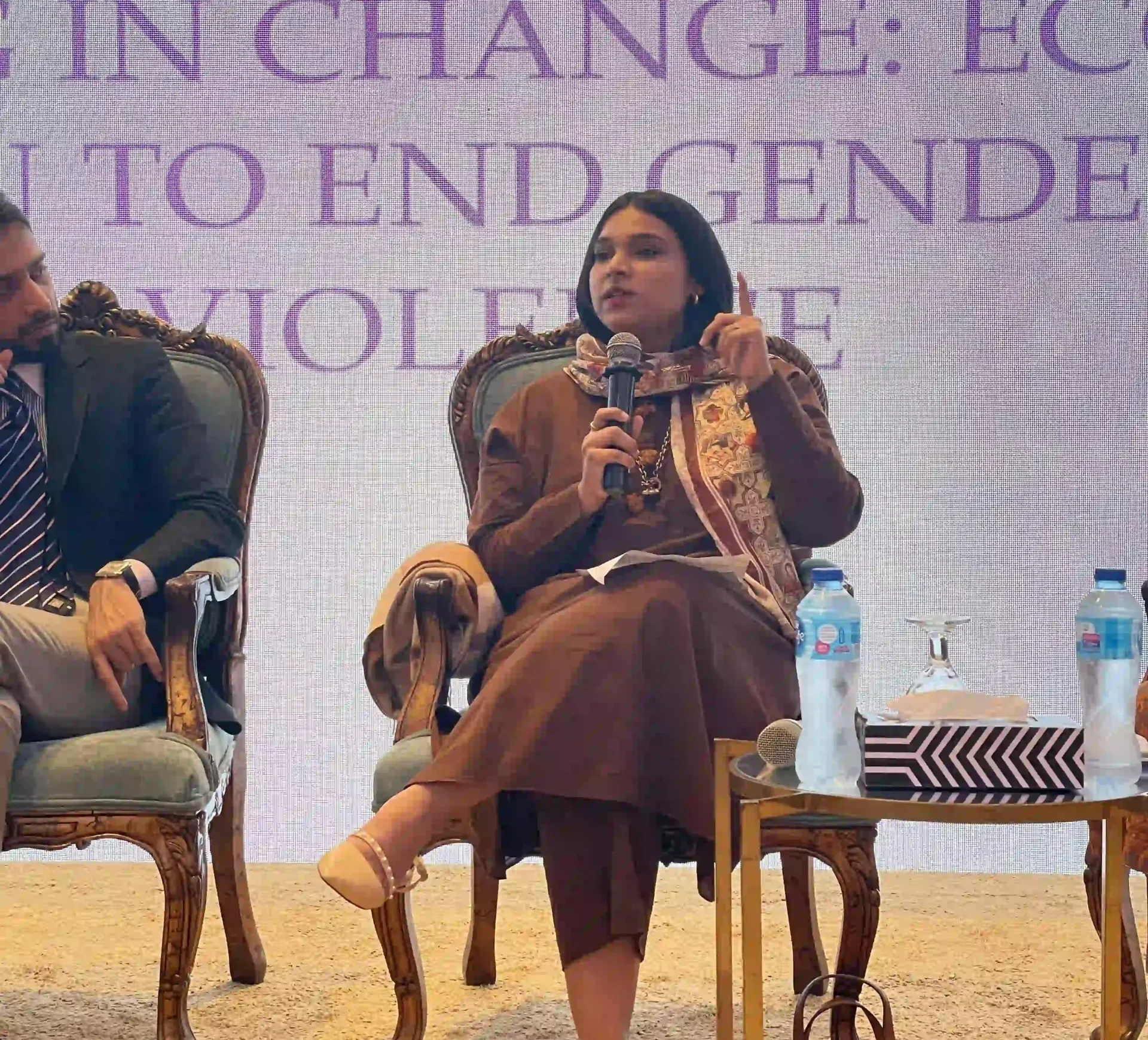
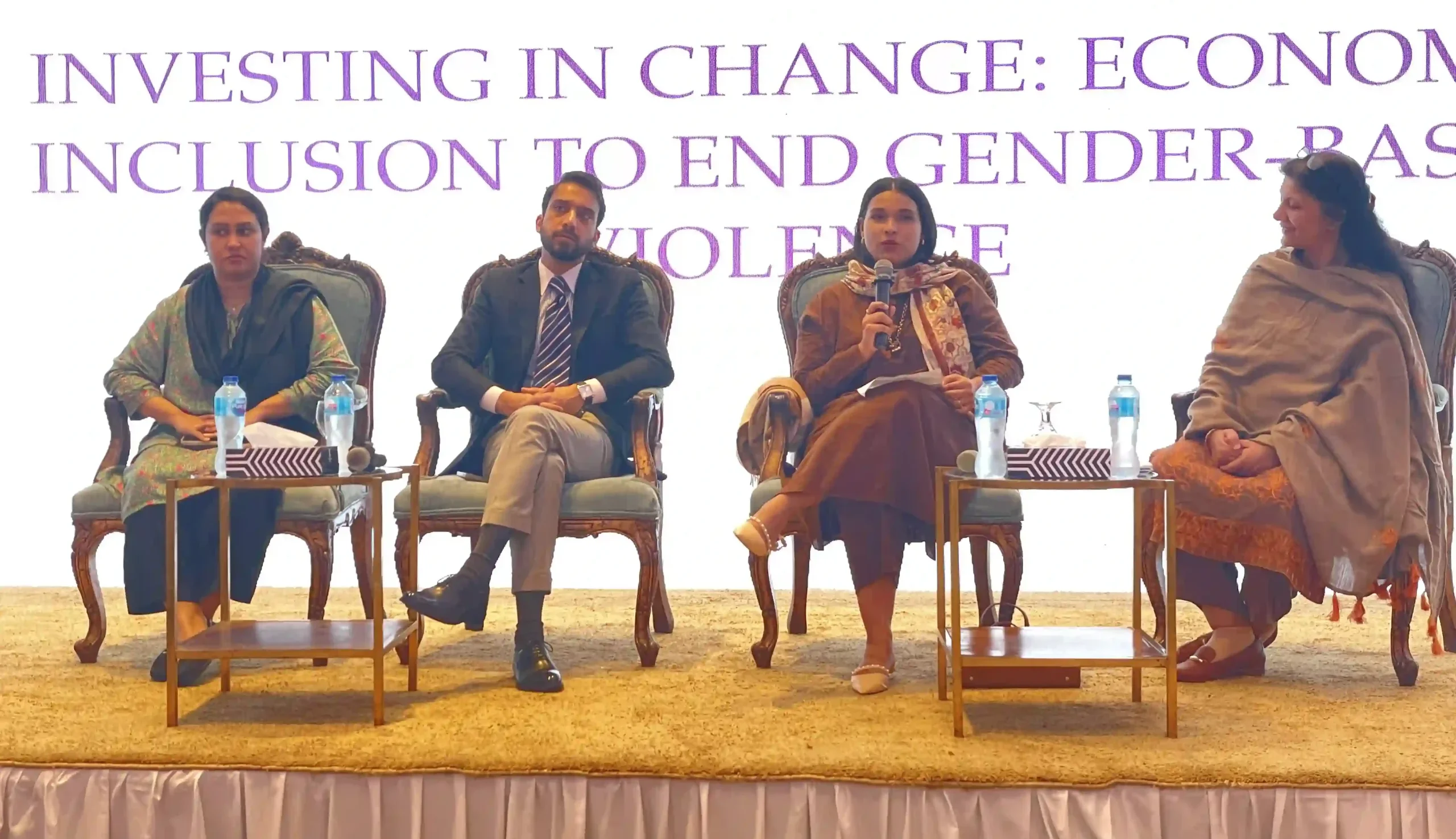
The momentum continued with the insightful session “Investing in Change: Economic Inclusion to End Gender-Based Violence,” where the focus shifted to the critical role of economic empowerment in addressing gender-based violence (GBV). The session featured prominent experts, including Faiqa Naseem, Head of Banking on Equality at the State Bank of Pakistan, Asfandyar Naseer (Prime minister youth program), Saman Sardar (Technical Advisor GIZ WE) emphasized that economic inclusion is a fundamental tool in preventing and ending GBV. They discussed how financial independence and access to economic opportunities can help women escape abusive situations and regain control over their lives. Participants were introduced to initiatives focused on skills development and financial literacy, which equip women with the tools to enter and thrive in the workforce. These initiatives were positioned as critical steps in creating more equitable opportunities for women in traditionally male-dominated industries, such as finance and business. The discussion also highlighted the importance of policy reforms that encourage women’s participation in the economy, such as inclusive policies in the workplace, access to loans and grants, and entrepreneurial support programs.